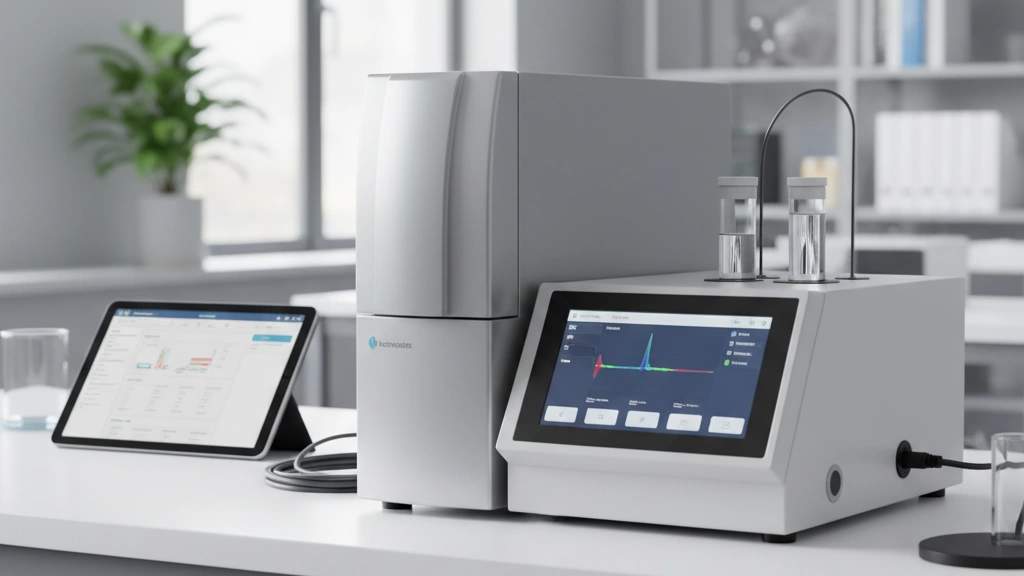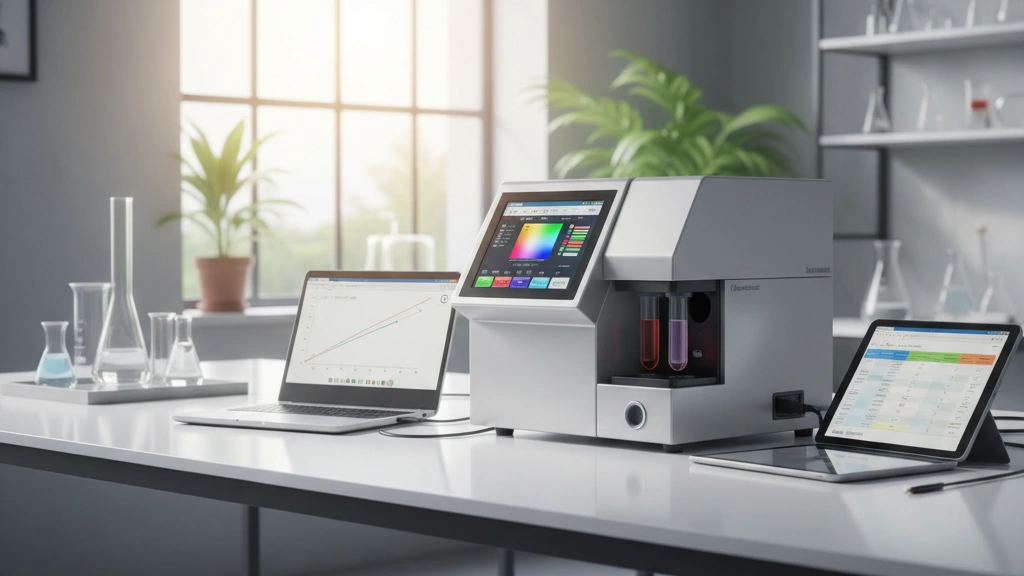

If you’re involved in display manufacturing or quality assurance, you already know that traditional spot colorimeters just don’t cut it anymore—especially with the increasing demand for ultra-high-resolution panels and flawless uniformity. Enter the 2D imaging colorimeter: a game-changing tool that captures full-screen luminance and color data in a single shot, enabling lightning-fast display uniformity testing and pinpoint mura detection. Whether you’re working with OLED, MicroLED, or cutting-edge AR/VR displays, understanding how this technology works—and why it’s rapidly becoming an industry standard—is crucial. In this guide, we’ll break down the core principles, practical applications, and what to look for to choose the best 2D imaging colorimeter that fits your lab or production line needs in 2025. Let’s get straight to the heart of advanced display metrology.
How a 2D Imaging Colorimeter Works
A 2D imaging colorimeter captures detailed spatial information about a display\’s luminance and color characteristics in a single shot. Unlike spot colorimeters that measure a single point or imaging photometers that focus only on luminance, these advanced systems map the full two-dimensional distribution of brightness and chromaticity, providing a comprehensive view of display uniformity and defects.
Core Components
- Scientific-grade cooled CCD/CMOS sensor: Ensures low noise and high sensitivity, allowing detection of subtle brightness and color differences, especially in low-light conditions like OLED black mura.
- Precision filter wheel (RGB + optional narrowband filters): Enables accurate color separation by sequentially filtering red, green, and blue wavelengths, enhancing chromaticity measurement precision (x,y or u\’v\’ space).
- Telecentric optics: Maintains consistent magnification across the field of view and minimizes angular distortion, crucial for accurate pixel-level measurements.
- Peltier temperature stabilization: Keeps the sensor and filters at a steady temperature to reduce wavelength shift and sensor noise, preserving measurement repeatability.
Measurement Principle
This colorimeter acquires full 2D images representing both luminance (cd/m²) and chromaticity coordinates (x,y or u\’v\’) simultaneously. By capturing red, green, and blue filtered images in rapid succession through the filter wheel, the system reconstructs a precise color map of the display surface. The result is a detailed, pixel-level representation of brightness and color uniformity in one scan.
Spot Colorimeter vs. Imaging Photometer vs. 2D Imaging Colorimeter
| Feature | Spot Colorimeter | Imaging Photometer | 2D Imaging Colorimeter |
|---|---|---|---|
| Measurement Area | Single point | Full screen luminance only | Full screen luminance + color |
| Color Measurement | Limited or none | No | Full chromaticity (RGB or filter wheel) |
| Spatial Resolution | No | Medium | High (pixel-level) |
| Measurement Speed | Slow (point-by-point) | Fast | Ultra-fast (<2 sec for full frame) |
| Applications | Simple QC, spot checks | Luminance uniformity tests | Mura detection, demura, gamma, flicker analysis |
Filter-based vs. Spectrograph-based 2D Colorimeters
| Aspect | Filter-based 2D Systems | Spectrograph-based 2D Systems |
|---|---|---|
| Measurement Method | Sequential RGB filtering with sensor array | Spatially resolved spectrum acquisition |
| Speed | Ultra-fast full-frame measurement (<2 s) | Slower; requires spectral data processing |
| Color Accuracy | High for standard RGB, limited to filter bands | Very high; full spectral data |
| Complexity | Lower complexity, easier calibration | More complex, sensitive to alignment |
| Cost | Moderate to high | Generally higher cost |
| Ideal Use Cases | Production QC, mura detection, local dimming | Research, spectral metrology, advanced color analysis |
Understanding these operational principles and component choices can help select the ideal 2D imaging colorimeter for sophisticated display metrology needs, balancing speed, accuracy, and application demands.
Why Choose 2D Imaging Colorimeter Over Traditional Tools
2D imaging colorimeters bring game-changing benefits over spot colorimeters and imaging photometers. Here’s why they stand out:
-
Ultra-fast full-screen uniformity and mura detection
They scan entire displays in under 2 seconds, much faster than spot meters that test one point at a time. This speed helps quickly spot mura (blemishes) and uniformity issues on OLED, MicroLED, and MiniLED panels.
-
Pixel-level defect analysis
With high resolution, you get pixel-perfect detail. This supports demura systems and local dimming evaluation—critical for detecting tiny defects invisible to traditional tools.
-
Viewing-angle measurement
Integrated goniometers allow precise viewing angle tests, essential for automotive CID, HUD, and AR/VR near-eye displays.
-
Gamma, white balance, flicker, and response time
High-speed modes capture dynamic display behaviors, supporting detailed gamma correction and flicker analysis beyond what standard meters can do.
Real Comparison: Measurement Time & Repeatability
| Feature | 2D Imaging Colorimeter | Spot Colorimeter | Imaging Photometer |
|---|---|---|---|
| Full-screen scan time | < 2 seconds | Minutes (point-by-point) | Minutes to hours (lower resolution) |
| Pixel-level detail | Yes | No | Limited |
| Viewing-angle support | Yes (goniometric) | No | Optional |
| Flicker/response time | High-speed modes | No | Limited |
| Repeatability (Δx,y) | < 0.001 | ~0.005 | ~0.003 |
In short: 2D imaging colorimeters save time, boost accuracy, and reveal defects that traditional tools can miss. They’re ideal for fast-paced production lines and detailed R&D work alike.
Critical Technical Specifications to Evaluate (2025 Buyers Checklist)
When choosing a 2D imaging colorimeter in 2025, focus on these key specs to match your display testing needs:
| Specification | What to Look For | Why It Matters |
|---|---|---|
| Resolution | 12–32 MP typical; fine pixel pitch | Higher resolution captures detailed pixel-level defects and mura. |
| Dynamic Range & Low-Light | Down to 0.0001 cd/m² for OLED black mura detection | Essential for detecting subtle luminance issues in dark areas. |
| Color Accuracy | Δx,y < 0.001 standard | Ensures precise chromaticity measurements, critical for color matching. |
| Measurement Speed | Ultra-fast capture (under 2 seconds) | Saves time in production; useful for in-line quality control. |
| Software Ecosystem | Supports SDK, easy integration with MES | Smooth workflow and automation for labs and production lines. |
| Cooling Method | Peltier-cooled sensors with low dark current noise | Keeps sensor noise minimal, improving data quality during long scans. |
| Demura Compatibility | Works directly with demura correction systems | Enables seamless pixel-level defect analysis and display correction. |
This checklist covers everything from resolution to integration, helping you pick a reliable imaging luminance meter that fits your production or R&D environment perfectly.
Industry Applications in 2025
2D imaging colorimeters are becoming essential across various display industries in 2025. Here’s where they shine:
-
OLED & MicroLED smartphone and TV panels
Perfect for fast, pixel-level uniformity checks and mura detection on cutting-edge panels. Essential for quality control in vibrant, high-res displays.
-
Automotive CID and HUD displays
Helps measure luminance and color accuracy on complex curved surfaces, ensuring clear and safe visuals in dashboards and head-up displays.
-
AR/VR near-eye displays (NED)
Critical for testing uniformity and color fidelity in tiny, high-density displays where user eye strain is a concern.
-
Aviation and medical-grade panels
Used for strict compliance on brightness and color standards, guaranteeing precision in cockpit screens and medical imaging devices.
-
MiniLED backlight uniformity and local dimming zones
Analyzes backlight consistency and individual zone performance quickly, aiding production line efficiency in next-gen LCDs.
In short, 2D imaging colorimeters are the go-to tools where fast, accurate 2D color measurement and display uniformity testing matter most.
Leading 2D Imaging Colorimeter Brands & Models (2025 Landscape)
When it comes to 2D imaging colorimeters in 2025, a few key players stand out for their mix of performance, price, and trusted technology. Here’s a quick look at the top brands and models you’ll see in labs and production lines:
Jingce Electronics – Pro Series
- Known for high-resolution cooled CCD/CMOS sensors, delivering superb image quality with low noise.
- Domestic leader in cost-performance, offering premium specs without premium price tags.
- Ideal for detailed pixel-level defect detection and demanding display uniformity testing.
Konica Minolta CA-410 Series
- Solid reputation for accuracy and reliability.
- Great for quick screening and integration into production environments.
- Strong in color accuracy (Δx,y < 0.001) and dynamic range.
Instrument Systems LumiTop 4000 / 2700
- High-end scientific-grade devices geared towards R&D and advanced quality control.
- Fast measurement speeds and excellent cooling systems to reduce dark current noise.
- Typically used for OLED and MicroLED display testing.
TechnoTeam LMK 6 and LMK 5 Color
- Versatile solutions covering both lab and production applications.
- Offers flexible software ecosystems and SDK support for easy integration.
- Known for robust measurement speed and reliable color measurement over large screens.
ELDIM UMaster & OptiScope-SA
- Focus on telecentric optics for precise viewing angle studies.
- Strong performance especially in viewing angle luminance/color evaluation.
- Popular in automotive CID and AR/VR display testing.
Quick Comparison Table
| Brand/Model | Resolution (MP) | Speed (full screen) | Price Tier | Special Features |
|---|---|---|---|---|
| Jingce Pro Series | 16 – 32 | <2 seconds | Mid-range | Cooled sensor, pixel-level accuracy |
| Konica Minolta CA-410 | 12 – 20 | ~3 seconds | Mid to High | High color accuracy, easy integration |
| Instrument Systems LumiTop | 20 – 30 | <2 seconds | High-end | Advanced cooling, R&D focus |
| TechnoTeam LMK 6 / LMK 5 | 12 – 24 | ~2–3 seconds | Mid-range | SDK support, production-ready |
| ELDIM UMaster/OptiScope | 15 – 25 | ~2 seconds | Mid to High | Telecentric optics, viewing angle |
If you’re in the market for a 2D colorimeter, weigh these options based on your specific needs—whether it’s lab-grade precision, fast production line scans, or specialized display testing like AR/VR or automotive panels. Each brand offers a unique balance of resolution, speed, and price to fit local testing environments and workflows.
How to Choose the Right 2D Imaging Colorimeter for Your Lab or Line
Picking the right 2D imaging colorimeter depends on your budget, workflow, and technical needs. Here’s a quick guide to help you decide:
Budget Tiers
| Budget Range | Typical Features | Suitable For |
|---|---|---|
| Under $80k | Basic cooled sensors, standard optics | Small labs, entry-level tests |
| $80k–$150k | Higher resolution, faster speeds, better cooling | Mid-sized labs, moderate production lines |
| Above $150k | Top resolution (30+ MP), advanced cooling, full software suite | Large production, R&D, precision tasks |
Lab vs. In-line Production
- Lab systems focus on accuracy, flexibility, and detailed analysis. They often have slower measurement speeds but deeper data output.
- In-line production tools prioritize speed, automation, and easy integration with manufacturing execution systems (MES). Rugged design and repeatability are key.
Software Integration
- Look for SDKs (Software Development Kits) compatible with LabVIEW, Python, or custom platforms.
- Production lines benefit from colorimeter software that syncs smoothly with MES for automated data logging and defect tracking.
- User-friendly interfaces with real-time analysis help speed up decision-making on the floor.
After-Sales Support & Calibration
- Ensure the supplier offers regular service and calibration support, especially ISO 17025 traceable calibration.
- Quick calibration turnaround improves uptime and measurement reliability.
- Local service centers or responsive online support is a big plus for minimizing downtime.
By balancing these factors, you can match your 2D imaging colorimeter to your specific usage—whether that’s detailed lab analysis or high-speed production checking.
Future Trends (2025–2028)
The future of 2D imaging colorimeters looks exciting with several tech advancements set to change the game:
-
61 MP+ Sensors: Higher resolution sensors are coming, pushing beyond 61 megapixels. This means even sharper, pixel-level inspection for mura detection and display uniformity, perfect for the smallest defects in OLED, MicroLED, and other cutting-edge panels.
-
AI-Driven Mura Classification: Artificial intelligence will play a bigger role. AI-powered software can quickly classify and prioritize display defects, speeding up demura processes and improving accuracy. This reduces manual analysis time and boosts production quality.
-
Spectral Imaging Hybrids: Combining filter-wheel colorimeters with spectral imaging tech gives more precise color and luminance data. These hybrids capture both broad 2D color maps and spectral details in one go, enhancing color accuracy and diagnostics on complex displays.
-
Integration with Automated Robotic Lines: 2D imaging colorimeters will increasingly connect with automated production lines. Robotic arms equipped with colorimeters will handle inspections in real-time, enabling faster throughput and consistent quality control without human bottlenecks.
These trends make 2D color measurement smarter, faster, and more reliable—answering growing demands for high-quality display testing in smartphones, TVs, automotive, AR/VR, and more. Staying on top of these innovations is key for labs and manufacturers aiming to lead in display quality control.