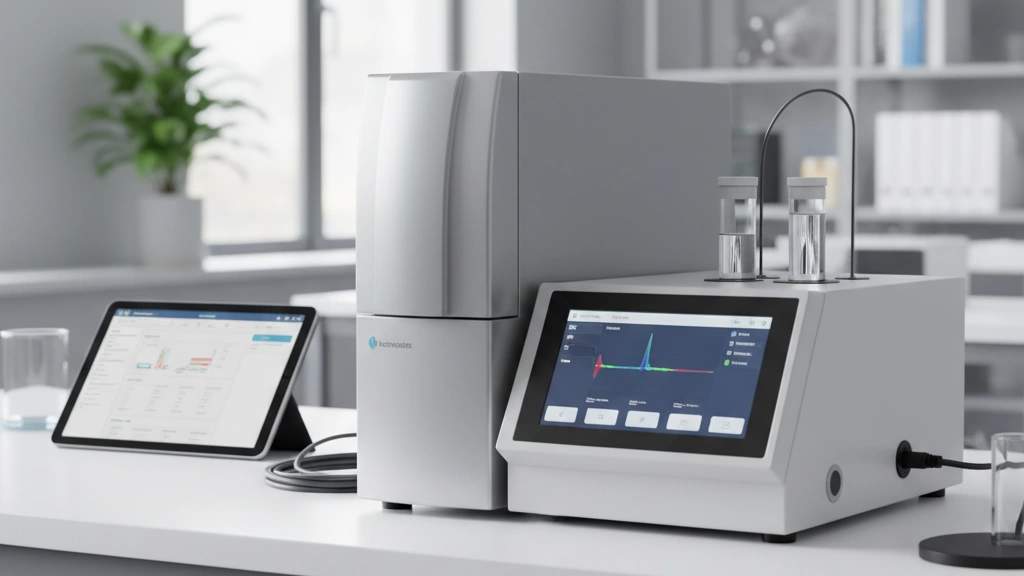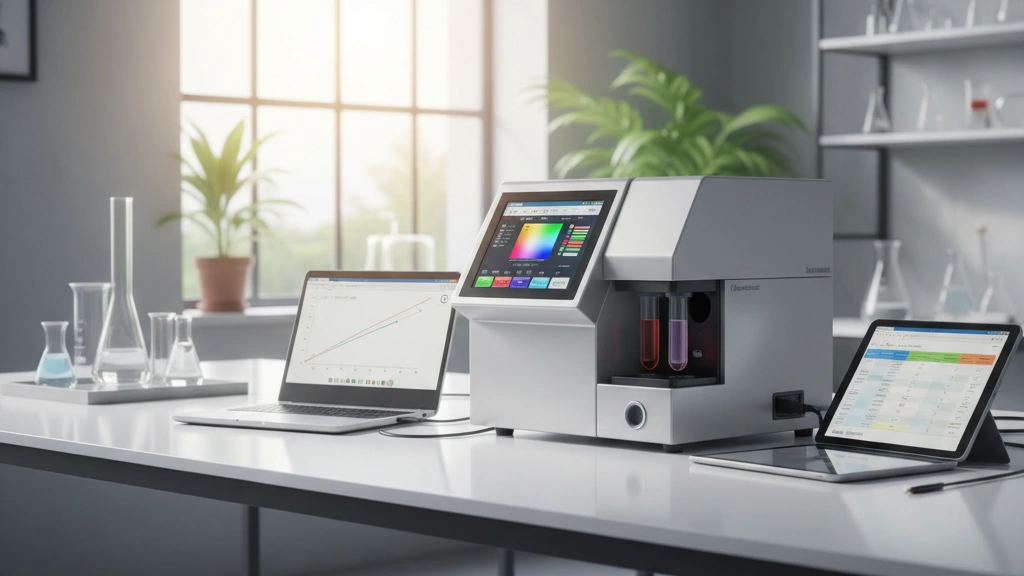

Measuring millions of pixels in real time isn’t just a challenge—it’s a necessity in today’s display and lighting industries. That’s where the filter-based imaging colorimeter steps in, delivering ultra-fast, accurate 2D luminance and color measurements using tristimulus XYZ filter technology. Whether you’re working with OLED, microLED, MiniLED, or automotive HUDs, understanding how filter-based colorimeters compare to spectral systems—and why they’re the go-to choice for production-line testing—can transform your quality control processes. Ready to explore how this technology balances speed, cost, and precision? Let’s dive into the essentials of filter-based imaging colorimeters and why they’re revolutionizing modern metrology.
What Is a Filter-Based Imaging Colorimeter and How Does It Work?
A filter-based imaging colorimeter is a powerful measurement tool designed to capture accurate color and luminance information across an entire surface in a single shot. It uses CIE-matched tristimulus filters (X, Y, Z) that closely replicate the way the human eye perceives color, making its readings highly relevant for display and lighting applications.
Core Principle: Mimicking Human Vision with Tristimulus Filters
At the heart of the system are tristimulus filters that correspond to the CIE color-matching functions. These filters isolate the X, Y, and Z components of visible light, which represent how the human eye observes color. This approach enables the colorimeter to produce data aligned with human visual perception, including luminance (Y) and chromaticity coordinates (x, y or u’v’).
System Components
A typical filter-based imaging colorimeter includes:
- High-resolution CCD or CMOS sensor: Captures detailed 2D images with millions of pixels.
- Precision optics: Ensures sharp, distortion-free imaging across the target area.
- Tristimulus filter wheel or fixed on-sensor filters: Quickly switch or capture X, Y, and Z filtered images to derive color measurements.
- Neutral Density (ND) filters: Automatically adjust to a wide range of brightness levels, increasing dynamic range for high-luminance displays.
Measurement Process: Fast, Full-Field Color Capture
The device either simultaneously or sequentially captures images filtered for luminance and chromaticity, covering the entire field of view at once. This results in spatial color data that reflects brightness and color variations across the surface rather than single-point readings.
Key Output Metrics
From these measurements, the colorimeter provides:
- Luminance in candela per square meter (cd/m²)
- CIE chromaticity coordinates (x, y or u’v’)
- Color difference ΔE for precise color deviation analysis
- Uniformity maps revealing brightness or color inconsistencies
- Mura detection tools to identify subtle display defects
This combination of high-resolution imaging and color science makes filter-based imaging colorimeters invaluable for quality control and process monitoring in display manufacturing and lighting inspections.
Filter-Based vs. Spectrally-Based Imaging Colorimeters: A Direct Comparison
When choosing between filter-based imaging colorimeters and spectral-based systems, knowing the tech differences is key.
| Feature | Filter-Based Imaging Colorimeter | Spectrally-Based Imaging Colorimeter |
|---|---|---|
| Tech Approach | Uses CIE-matched tristimulus (X, Y, Z) filters to mimic human vision | Measures full light spectrum with a spectrometer |
| Speed & Throughput | Fast—sub-second measurements perfect for inline production | Slower due to spectral scanning, less suited for high-speed lines |
| Accuracy | Great for broadband, continuous light sources like LCD or CRT displays | Best for narrowband emissions (LEDs, OLEDs) but needs less calibration |
| Cost & Complexity | Lower cost, simpler design, easy to maintain | Higher upfront cost, more complex calibration and upkeep |
| Maintenance | Stable calibration, low drift | Requires frequent calibration and expert support |
| Best Use Case | High-volume quality control in manufacturing lines | Research, development, and exotic/emitter testing |
In short, if you’re running a US-based production line that demands speed and cost-efficiency, a filter-based imaging colorimeter fits right in. But if you need pinpoint spectral accuracy, especially for new LED or OLED tech, a spectral system is better.
Choosing the right tool depends on your specific workflow, volume, and accuracy needs.
Advantages of Filter-Based Imaging Colorimeters in Production Environments
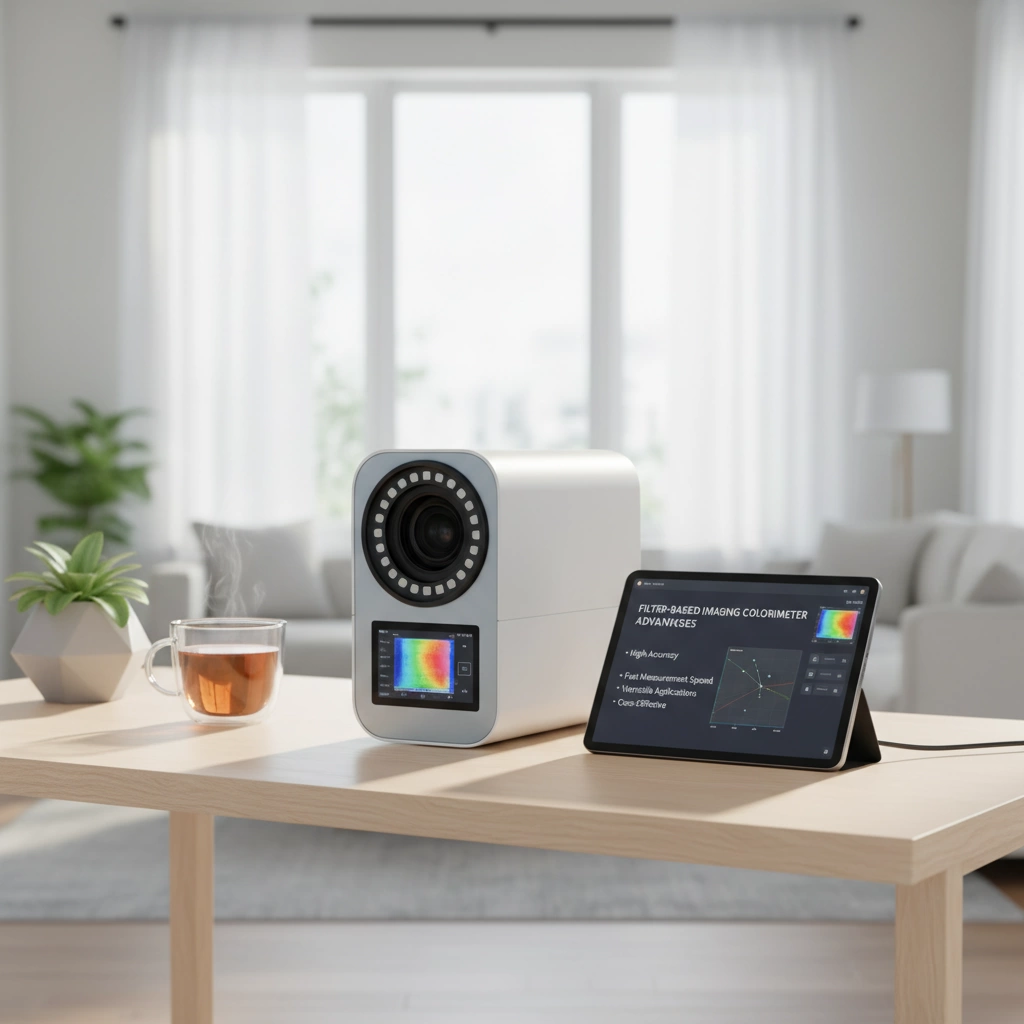
Filter-based imaging colorimeters shine in production settings because they deliver ultra-fast 2D measurements, capturing millions of data points at once. This speed means you get a full color and luminance profile of your entire display or lighting component nearly instantly, making them ideal for high-volume quality control.
These systems also handle a high dynamic range with ease, thanks to automatic neutral density (ND) filter switching. That lets them accurately measure very bright and very dim areas without losing detail, ensuring consistent results across the board.
Calibration stability is another big plus. Filter-based colorimeters maintain low drift over time, so you don’t need frequent recalibration, saving both downtime and maintenance costs.
Plus, they integrate smoothly with automated test software using APIs or sequencing tools like TrueTest. This makes them perfect for production lines aiming to streamline inspection workflows and build pass/fail automation directly into their processes.
Finally, when you need to scale up – adding multiple stations for faster throughput – filter-based imaging colorimeters offer a cost-effective solution. Their simpler setup and lower maintenance compared to spectral systems reduce overall operational costs, making them a smart investment for manufacturing environments in the U.S. market.
Limitations and How Modern Designs Overcome Them
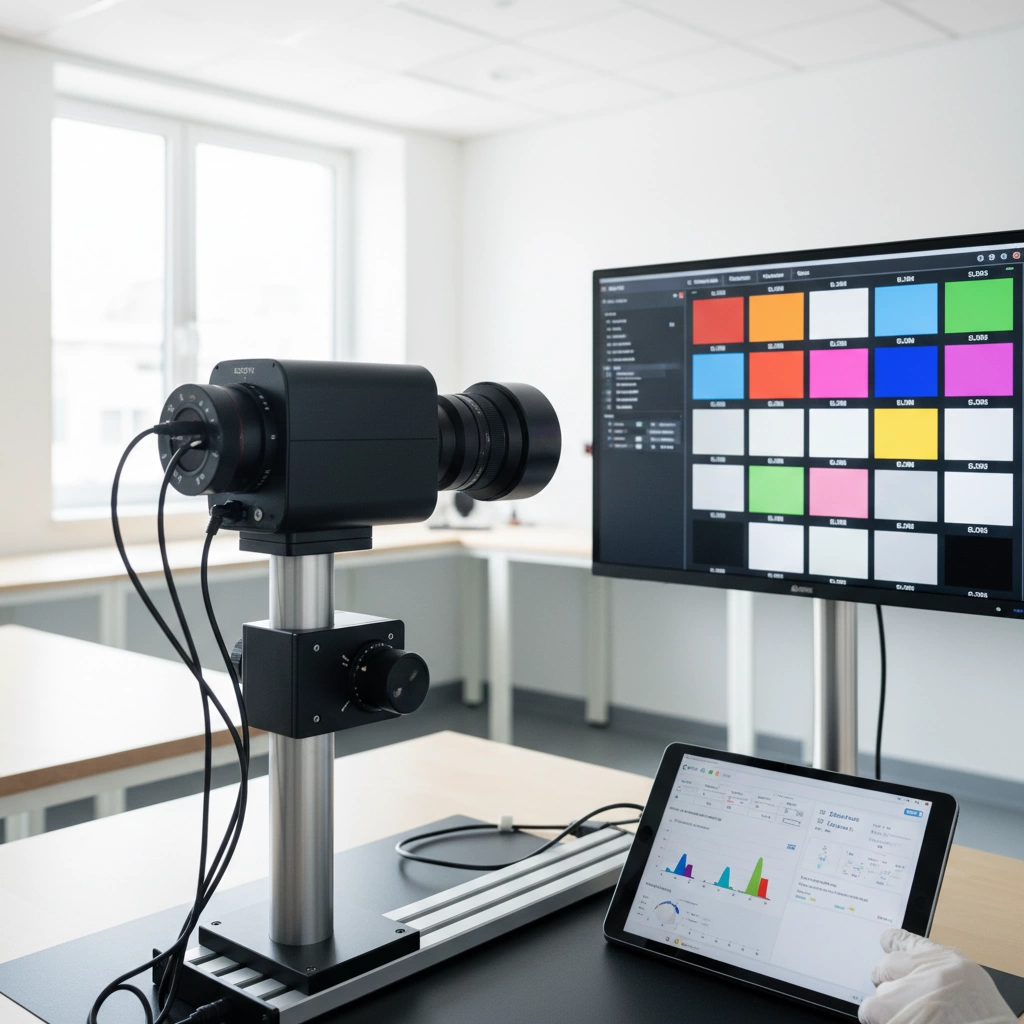
Filter-based imaging colorimeters work great for most applications, but they do have some limits—especially when measuring narrowband light sources like certain LEDs or OLEDs. This challenge is called spectral mismatch, where the tristimulus filters don’t perfectly match the color output, causing small errors.
How We Fix Spectral Mismatch Issues
- Matrix Optimization: Advanced software fine-tunes measurements by adjusting calculations to better match the source’s unique spectral profile.
- Hybrid Spectrometer-Assisted Calibration: Combining filter-based imaging with spot checks from a spectrometer improves accuracy for tricky, narrowband displays.
- User-Defined Source Profiles: Custom profiles for specific light sources help the system adapt and stay precise over time.
Real-World Accuracy You Can Trust
After proper calibration, you can expect Δxy (color difference) values lower than 0.001. That’s tight enough for demanding applications like microLED inspection and automotive display validation, giving you confidence in both uniformity and color accuracy on your production line.
Key Applications of Filter-Based Imaging Colorimeters
Filter-based imaging colorimeters play a crucial role in many industries where precise color and luminance measurement matter. Here’s a quick look at their key uses:
- Display panel uniformity and gamut testing: Essential for smartphones, monitors, and TVs to ensure consistent color and brightness across the entire screen.
- Backlight and keyboard illumination inspection: Critical for checking LEDs behind keyboards and device backlights to spot defects early.
- Automotive cluster, CID, and HUD validation: Used to measure color accuracy and luminance in car dashboards, central information displays (CIDs), and heads-up displays (HUDs).
- AR/VR near-eye display metrology: Helps verify color and brightness uniformity in emerging augmented and virtual reality devices.
- LED binning and lighting module quality control: Streamlines sorting of LEDs by color and brightness, ensuring only top-quality parts move forward.
Case Study Spotlight: MicroLED Production
MicroLED displays demand extreme uniformity, with color differences less than 1%. Filter-based imaging colorimeters have proven capable of achieving this level of precision in production lines—catching minute mura defects and guaranteeing near-perfect uniformity. This makes them a go-to solution for next-gen microLED manufacturing in the U.S., where quality standards and throughput must both be high.
How to Select the Right Filter-Based Imaging Colorimeter
Choosing the right filter-based imaging colorimeter boils down to your specific needs on the production floor and inspection detail.
-
Resolution needs: For fine pixel-level work, like microLED inspection, look for systems offering 29MP to 61MP or higher. Higher resolution means sharper images and more accurate color and luminance data at the micro scale.
-
Lens options and working distance: Make sure the colorimeter has versatile lens choices. This flexibility lets you adjust based on your product size and line setup, whether you need close-up inspections or wider field views.
-
Software features: Key software tools streamline your process:
- POI/ROI analysis for focusing on points or regions of interest,
- Pass/fail automation to speed up quality control,
- Defect classification to quickly identify mura and other display flaws.
-
Why choose Jingce: Jingce stands out by offering:
- High-precision optics built to deliver consistent, reliable data,
- Competitive performance matching top brands like Radiant and Konica Minolta,
- Localized support tailored for U.S. manufacturers,
- Customizable configurations to fit your unique production demands.
Selecting a colorimeter that fits your resolution needs, provides flexible optics, robust software, and reliable support will make your quality control smarter and simpler.
Future Trends in Filter-Based Imaging Colorimetry
Filter-based imaging colorimeters are evolving fast, driven by demand for higher precision and speed in the U.S. production and quality control sectors. Here’s what’s coming next:
-
Higher Resolutions and Faster Sensors
Expect sensors that pack more megapixels (think beyond 60MP) for ultra-fine detail—perfect for microLED pixel inspection and fine display uniformity checks. Faster sensor readouts mean sub-second measurements become even quicker, keeping up with speedy production lines without trading off accuracy.
-
AI-Enhanced Defect Detection and Predictive Calibration
Artificial intelligence is stepping in to automate defect classification and spot mura or color shifts automatically. AI also helps predict calibration needs before measurement drift happens, minimizing downtime and maintaining consistent performance in high-volume environments.
-
Hybrid Workflows with Spectral Spot Checks
To tackle the spectral mismatch issues common with narrowband LED or OLED sources, future filter-based systems will integrate quick spectral spot checks. This hybrid approach blends filter-based speed with the spectral system’s accuracy, offering the best of both worlds—ideal for R&D labs and demanding manufacturing lines alike.
These trends mean filter-based imaging colorimeters will continue to hit that sweet spot between speed, cost, and accuracy—meeting the exacting needs of U.S. display, automotive, and lighting industries.